Relying on a handshake agreement with another advisor puts your clients, your business, and your legacy at serious risk when unexpected events occur.
The Dangerous Illusion of Informal Succession Arrangements
Across the country, independent advisors reassure themselves with a familiar refrain: 'If something happens to me, the advisor I golf with will take care of my clients.' It sounds responsible. It feels collegial. It checks the mental box. But let's be blunt—in most cases, that arrangement will fail when it's actually tested.
The typical setup looks deceptively simple. You and another RIA agree to 'cover' each other. There may be a short written agreement. You've talked through valuation in broad terms. Everyone intends to 'do the right thing.' On paper, that feels like continuity. In reality, it's often a fragile understanding resting on goodwill, not infrastructure.
Here's the uncomfortable truth: if it fails, it won't be you dealing with the consequences. It will be your family, your clients, and the legacy you spent decades building. And deep down, you already know this arrangement isn't enough.
What a Real Business Continuity Plan Actually Entails
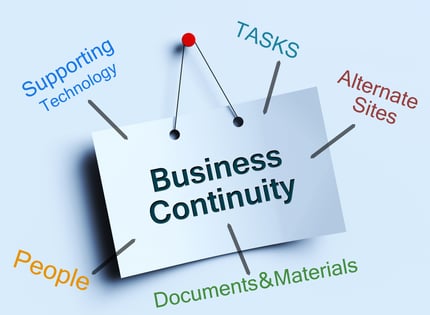
A legitimate business continuity plan isn't a verbal agreement or a two-page letter of intent. It's a comprehensive, legally binding framework designed to protect value under the worst possible circumstances. It addresses capacity, operations, valuation, funding, client transition protocols, and timeline certainty—all documented and enforceable.
Real continuity planning starts with operational compatibility. Can the successor advisor actually absorb your book without dropping balls? Do they share the same custodians, tech stack, portfolio models, planning philosophy, fee structure, and client segmentation? If not, every point of friction increases attrition, and attrition destroys value before your estate ever sees a dollar.
Beyond compatibility, a proper plan defines valuation with precision—not vague language like 'fair market value' or 'industry multiple,' but specific formulas, revenue definitions, timing, and payment structures. It includes funding mechanisms that don't rely solely on earn-outs, which shift all the risk to your grieving family. It specifies communication protocols so clients receive consistent, professional messaging during a chaotic time.
Most critically, a real continuity plan is stress-tested annually. It's reviewed, updated, and rehearsed—not filed away and forgotten. It evolves as your practice grows, as market conditions change, and as the successor's situation shifts. It's treated like the mission-critical asset protection strategy it actually is.
Why Handshake Agreements Fail When You Need Them Most
The first point of failure is capacity collapse. If you die or become permanently disabled, your colleague doesn't inherit one client—they inherit every household, every review cycle, every distribution request, every anxious phone call, every operational workflow. Immediately. Most friendly RIAs are already running near capacity. They have their own clients, their own growth targets, their own staffing constraints. Ask yourself honestly: Do they have excess advisor bandwidth? Do they have operational redundancy? Do they have a trained service team ready to absorb your book? If the answer is 'they'll figure it out,' that's not capacity. That's hope.
The second failure point is operational mismatch. Even capable advisors struggle when systems don't align. Different custodians mean account transfers. Different tech stacks mean data migration headaches. Different portfolio models mean explaining changes to confused clients. Different planning philosophies mean loss of the relationship your clients valued. Clients don't just transition because two advisors are friends. They transition when they feel alignment and stability. Any operational friction accelerates attrition.
The third failure is valuation fantasy. Many friendly continuity agreements include language like 'to be mutually agreed upon.' That works when everyone is healthy and relaxed. It does not work when your spouse is grieving, your partner is overwhelmed, revenue is already slipping, and clients are uncertain. If valuation isn't clearly defined in advance, it becomes a negotiation under duress. Your estate has no leverage. Your colleague has operational stress. That is not a stable environment for fair pricing.
Finally, there's the funding gap. Even if valuation is clear, where does the cash come from? Most 'friendly RIA' continuity plans rely heavily on earn-outs. Translation: Your family gets paid only if revenue stays. And they get paid slowly, over years, with no control over the outcome. Meanwhile, they're inheriting tax obligations, business liabilities, and the emotional weight of watching your life's work potentially unravel.
The Financial and Legal Consequences of Poor Planning
When informal continuity arrangements fail, the financial damage is swift and severe. Client attrition often begins within weeks as uncertainty spreads. A 30-50% revenue loss in the first six months isn't uncommon. That directly erodes the valuation your family was counting on. What was once a $2 million practice can quickly become a $1 million fire sale—or worse, an operational mess with ongoing liabilities and no buyer at all.
Legally, the risks multiply when documentation is thin or nonexistent. Without clear agreements, your estate may face disputes over ownership, access to client data, control of accounts, and distribution of assets. State regulators and custodians require proper legal authority for client transitions. If your 'golf buddy' doesn't have the right paperwork, clients could be left in limbo, unable to access their accounts or receive service. That's not just bad business—it's potential regulatory exposure.
Tax consequences compound the problem. If your practice is structured as a pass-through entity, income may continue flowing to your estate even as operations collapse, creating tax obligations without corresponding cash flow. If buy-sell agreements aren't properly funded or documented, your family may owe estate taxes on an illiquid asset they can't sell. These issues don't resolve themselves—they require proactive legal and financial structuring.
Perhaps most devastating is the reputational damage. Your clients trusted you. They expected you to have a plan. When that plan fails, it doesn't just hurt your family financially—it damages the professional legacy you spent decades building. Clients talk. Other advisors notice. The failure becomes your final professional chapter, and that's a tragedy that proper planning could have prevented.
Building a Bulletproof Continuity Strategy for Your Practice
Building real continuity starts with honest assessment. Identify a successor who has actual capacity, not just goodwill. That might be an internal team member you develop over time, a strategic partner who shares your operational infrastructure, or a firm specifically designed to execute continuity transactions. The key is verifiable capability, not just intent.
Next, document everything with legal precision. Work with an attorney who specializes in RIA transactions to draft a comprehensive continuity agreement. Define valuation using specific multiples or formulas tied to trailing revenue. Specify payment terms, including any upfront cash components. Address operational handoff protocols—who contacts clients, when, with what messaging. Include dispute resolution mechanisms. Make it enforceable.
Fund the agreement properly. Consider life insurance policies that provide liquidity for a buyout without forcing your family to rely on earn-outs. Explore bank financing options your successor could access quickly. Structure the deal so your family isn't left holding all the performance risk during a vulnerable time. Financial certainty is worth the upfront investment in proper structuring.
Finally, treat your continuity plan as a living document. Review it annually with your attorney, your successor, and your financial advisor. Update it as your practice grows, as your family situation changes, and as your successor's circumstances evolve. Run tabletop exercises—literally walk through what would happen if something happened to you tomorrow. Identify gaps. Fix them. Then document the improvements.
Your practice represents decades of work, countless relationships, and your family's financial security. It deserves more than a handshake with a friend who means well. It deserves a plan built to withstand the worst day of your life. That's not pessimism—it's responsibility. And it's the final act of stewardship you owe to everyone who depends on you.